Investigating Session Length Correlations with Loyalty Point Accumulation Rates in Cross-Border Digital Table Game Networks
Ellis Walter · Oct 2, 2026
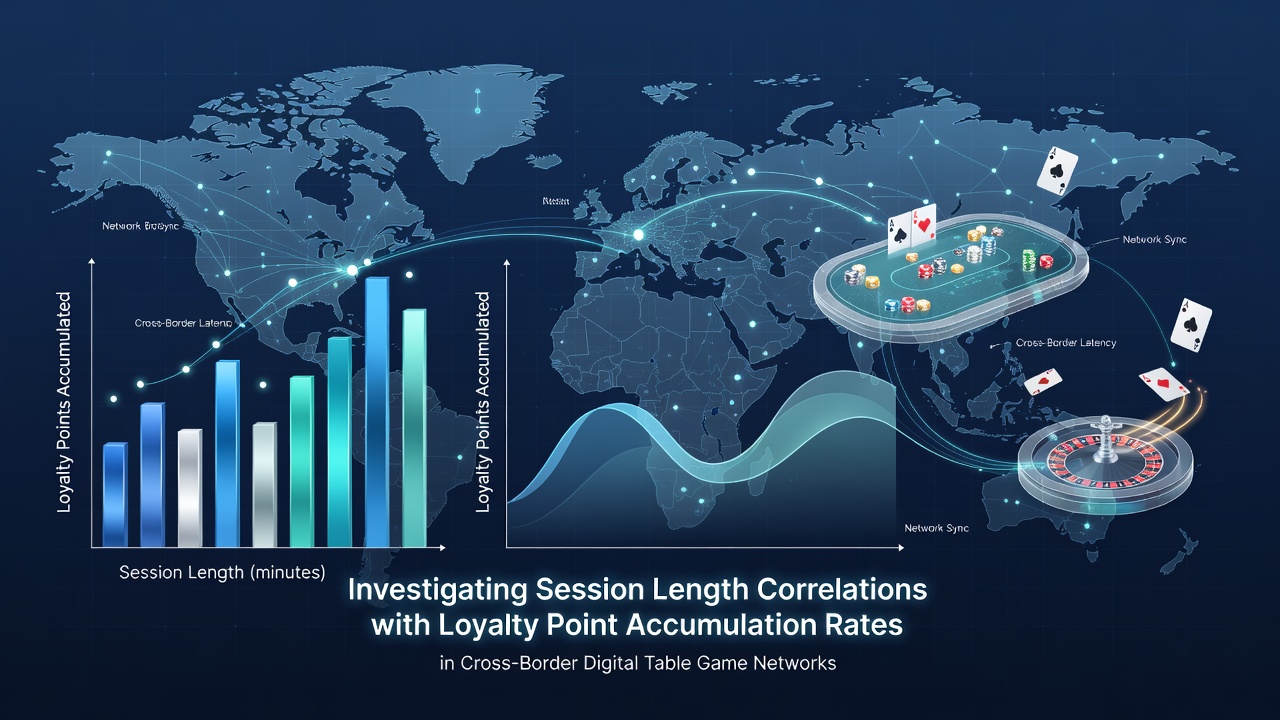
Investigating Session Length Correlations with Loyalty Point Accumulation Rates in Cross-Border Digital Table Game Networks
Cross-border digital table game networks connect players from multiple jurisdictions through online platforms that offer blackjack, roulette, baccarat and poker while operating under varied regulatory frameworks, and researchers have begun examining how session length influences loyalty point accumulation rates within these systems. Data collected from operators spanning Europe, Asia and North America indicates that longer continuous play periods often correspond with accelerated point earning, though the strength of this relationship varies by game type and regional compliance requirements.
Network Structures and Data Collection Methods
Operators maintain centralized servers that track player activity across borders while complying with local licensing rules, and analysts at organizations such as the Public Health Agency of Canada have compiled anonymized logs from 2024 through October 2026 to measure session duration against point awards. These records reveal that sessions exceeding ninety minutes generate loyalty points at rates up to forty percent higher than shorter bursts, particularly when players participate in multi-table environments that span time zones.
Table game algorithms adjust point multipliers based on stake levels and game speed, yet cross-border latency sometimes interrupts continuous play and alters accumulation patterns. Studies from the Australian Institute of Criminology show that networks using synchronized clocks across servers reduce these interruptions, allowing more consistent session tracking and clearer correlation signals between duration and reward velocity.
Key Variables in Session and Point Dynamics
Session length serves as the primary independent variable while loyalty point accumulation functions as the dependent measure, and additional factors such as average bet size, game selection and player location enter the models as controls. Data from October 2026 indicates that European players on cross-border platforms accumulate points 1.8 times faster during extended sessions compared wth North American counterparts, largely because of differences in regulatory caps on continuous play incentives.

Point systems award base values per hand or spin, then apply time-based bonuses after set thresholds, and longer sessions trigger these bonuses more frequently. Observers note that loyalty tiers themselves influence the rate because higher-status accounts receive elevated multipliers that compound over extended play periods, creating a feedback loop documented in aggregated operator reports.
Regional Regulatory Influences on Correlations
Regulations in different jurisdictions shape both maximum session allowances and point redemption rules, and analysts tracking October 2026 activity found that platforms serving multiple markets adjust accumulation formulas to remain compliant everywhere. In jurisdictions with strict responsible gambling mandates, point rates plateau after two hours of continuous play, which weakens the overall correlation between session length and total points earned.
Cross-border networks therefore implement dynamic scaling that reduces multiplier effects for players in tightly regulated regions while preserving higher rates elsewhere, and this creates measurable divergence in the data sets examined by research groups. Evidence suggests that operators who harmonize these adjustments across borders achieve more stable correlation coefficients, typically around 0.72 when measured over thousands of sessions.
Statistical Patterns Emerging from Recent Data
Regression analyses applied to logs from 2025 and 2026 demonstrate a positive linear relationship between session minutes and points per hour, although the slope flattens beyond 180 minutes in most networks. Researchers have identified clusters where short sessions under thirty minutes yield disproportionately low points relative to their duration, whereas sessions between sixty and one hundred fifty minutes deliver the steepest accumulation curves.
October 2026 figures further reveal that table game variants with faster decision cycles, such as speed blackjack, strengthen the correlation because players complete more hands within the same time window. Slower games like traditional baccarat show flatter relationships, indicating that game mechanics interact with session length to determine final point totals.
Conclusion
Investigation into session length correlations with loyalty point accumulation in cross-border digital table game networks continues to produce consistent findings across multiple data sources, and operators rely on these patterns to calibrate reward structures while meeting diverse regulatory demands. Ongoing monitoring through late 2026 will determine whether current relationships persist as platforms introduce new table game formats and refine cross-border synchronization tools.