The Influence of Visual Design Elements on Decision Speed During Online Poker Tournaments Accessed via Smartphones
Eden Wolf · Sep 18, 2026
The Influence of Visual Design Elements on Decision Speed During Online Poker Tournaments Accessed via Smartphones
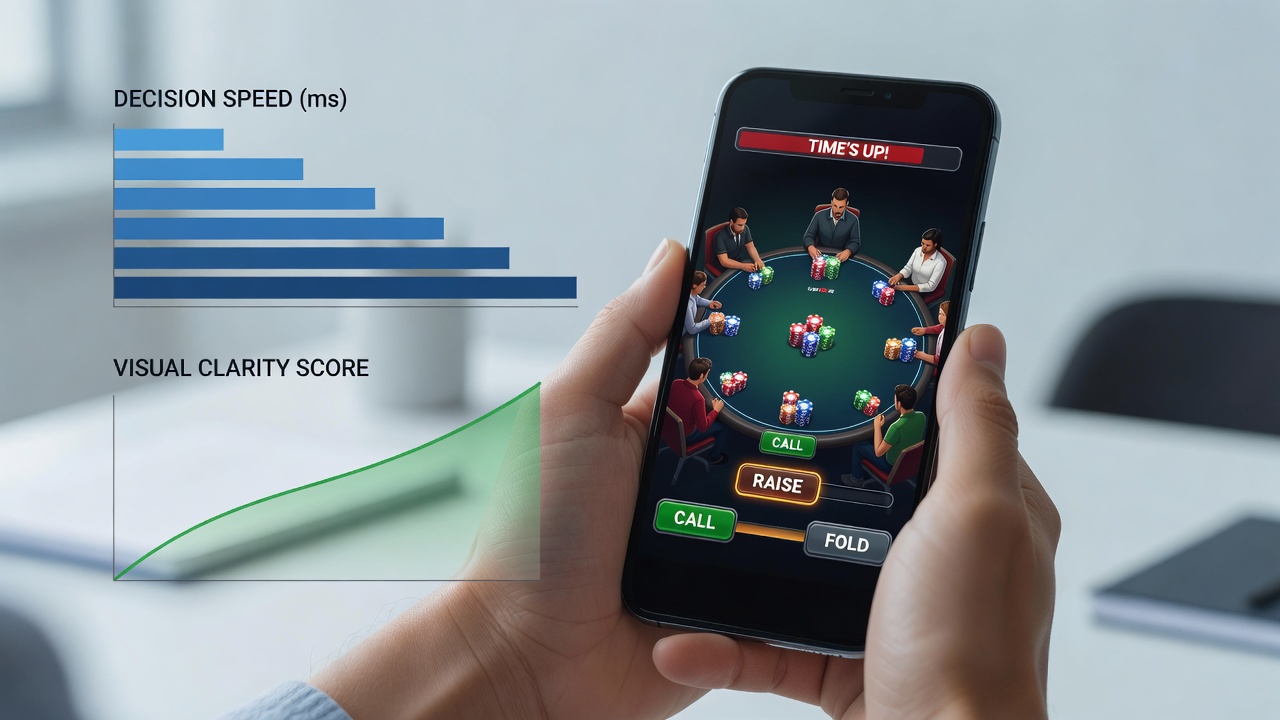
Visual design elements in smartphone-based online poker tournaments shape how quickly participants process information and reach decisions during each hand, and researchers have tracked these effects through controlled studies of interface layouts, color contrasts, and animation timing. Data from mobile gaming platforms indicate that button placement and icon sizing directly correlate with reduced reaction times when users face multiple betting options in rapid succession.
Core Visual Components and Their Measured Effects
Color palettes used in tournament interfaces influence cognitive processing speed, as evidenced by eye-tracking experiments where warmer tones on action buttons shortened the interval between card reveal and player response by measurable margins compared to cooler schemes. Font weight and size adjustments further contribute to this pattern, with bolder text on stack sizes and pot amounts allowing faster numerical assessments during high-pressure moments in multi-table events.
Card animations represent another layer of influence, and studies conducted on mobile devices show that smooth transitions between community card reveals can either accelerate or delay decision cycles depending on their duration and complexity. Shorter, subtle movements tend to maintain user focus on relevant data points, whereas prolonged effects sometimes extend the time needed for players to evaluate hand strength against visible board textures.
Mobile-Specific Constraints and Platform Data
Screen dimensions on smartphones impose unique limitations that designers address through adaptive scaling of interface components, and reports from September 2026 highlight how apps optimized for smaller viewports achieve faster decision speeds than those relying on static desktop-style layouts. Touch target dimensions play a central role here, since undersized betting controls increase error rates and subsequent correction times during tournament play.
Notification overlays and real-time update indicators also factor into overall pacing, with evidence from user interaction logs demonstrating that minimal, non-intrusive visual cues preserve momentum better than frequent pop-ups or expanding panels. Those who have analyzed session data across thousands of mobile tournaments note consistent patterns where streamlined visual hierarchies support quicker folds or raises in late-stage situations.
Research Findings on Decision Latency
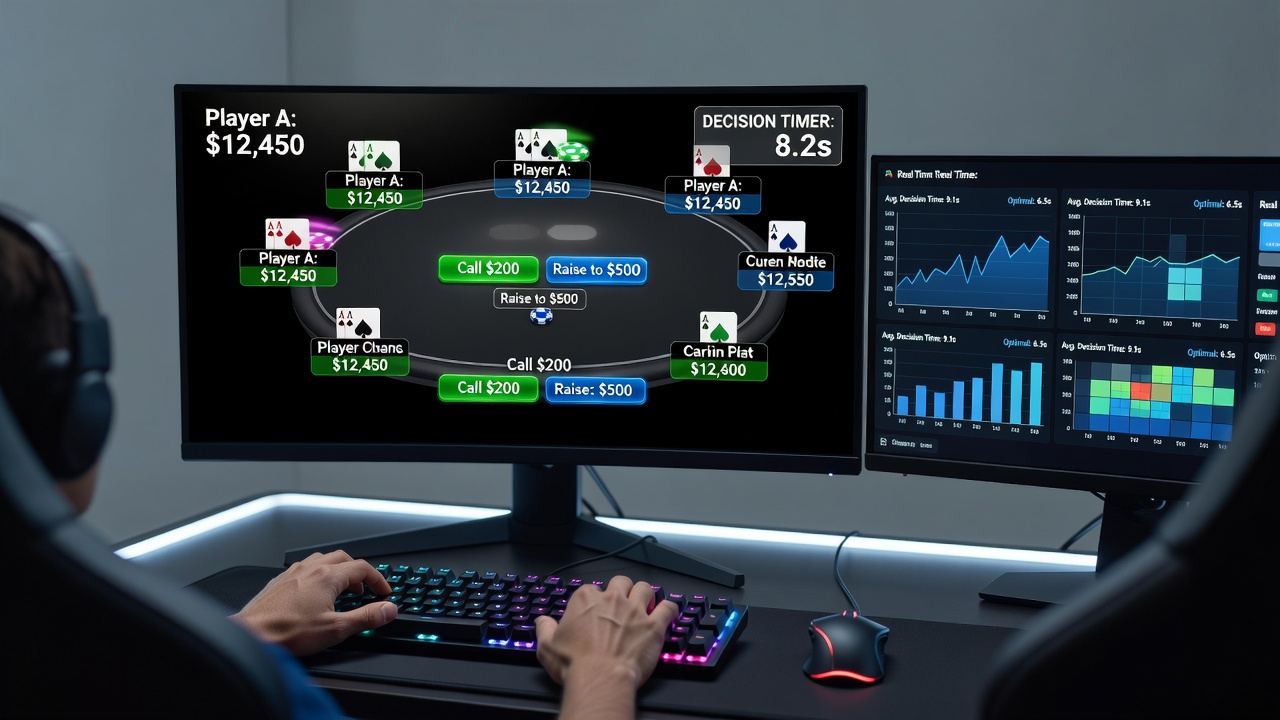
Academic examinations of visual processing in digital card games reveal that contrast ratios between foreground elements and background fields affect the speed at which players identify suited connectors or potential draws, and one analysis from a European research consortium documented average reductions in response latency when high-contrast modes were enabled. Similar observations appear in industry reports tracking tournament outcomes on major mobile platforms, where layout consistency across different device models correlates with steadier decision rhythms.
Iconography for actions such as check, bet, and fold receives particular attention in these investigations, since standardized symbols allow experienced users to bypass textual reading and proceed directly to selection. Data collected during peak tournament hours in 2026 shows that apps incorporating familiar icon sets maintain lower average decision times even as participant counts rise and pressure intensifies.
Interface Adjustments Observed in Practice
Developers have tested variations in spacing between action buttons and information panels, finding that tighter groupings reduce the physical movement required on touchscreens while still preserving clarity. Observers note that such adjustments prove especially relevant during heads-up stages when rapid successive decisions determine outcomes, and platform analytics confirm measurable differences in completion rates for time-sensitive choices.
Background elements and subtle gradients further modulate attention allocation, with research indicating that overly detailed textures can compete with primary game information and extend evaluation periods. Clean, focused designs instead channel user attention toward essential metrics like remaining blinds and opponent stack representations, supporting the quicker processing demanded by tournament structures.
Conclusion
Visual design elements continue to demonstrate measurable connections to decision speed in smartphone poker tournaments, as shown through aggregated platform metrics and targeted studies on interface variables. Continued examination of these relationships provides developers with concrete parameters for refining layouts that align with the pace of mobile play, while participants encounter interfaces calibrated to support efficient responses under tournament conditions.